
Community path builders in action - the audio edition
Sheppey, Somerset and a path building legend

I’m coming to the end of my year-long Path Campaigners’ toolkit project and I’m working on the audio element of it, which you can have a sneaky listen to.
***This post was initially uploaded in haste, as I ran out of the door last night, so I’ve updated it with some more information and specific links for each interview. ****
I’ve spent days editing the audio so far - it is not a quick job! There are more amazing interviews to come.
So far I have John Grimshaw (pictured), Frome’s Missing Links’ Richard Ackroyd, and Sheppey Light Rail Greenway’s annual bramble clearance, in which I meet a councillor, youth mobility scheme entrepreneur and a lot of amazing volunteers.
First up, Richard Ackroyd from Frome’s Missing Links. This is a 20-year-long campaign to connect a three mile stretch of countryside, from the end of the traffic-free Collier’s Way to the centre of the small Somerset town. You may recall it from my book!
Currently Frome and the path are connected by hilly roads, but last summer one of the hilliest was removed when nine years’ community effort finally came to fruition as tarmac was laid on another almost mile of path.
In spring 2025 Laura met Richard Ackroyd on this brand-new stretch of path linking the Colliers Way to Great Elm, to discuss their success and how they overcame landowner issues, worked with Network Rail, fundraised and built community support.
As a longstanding campaigner, Ackroyd has enormous amounts of expertise to share. When the route is built, you will be able to cycle to Bath, traffic-free.
Laura and Richard take a short tour of the path, and enjoy some of its charming features and views. At one point Laura misidentifies a songbird as a Robin, but Richard is too polite to correct her.
Next up, community path building legend, John Grimshaw.
John Grimshaw founded Sustrans, now the Walk, Wheel Cycle Trust, and the National Cycle Network. He built his first path in 1979 with volunteers and has built a route every year since. He would want me to say he achieved this of course alongside countless other staff and countless partner organisations and local authorities - with whom none of the work would have been possible.
John talks through some of the nuts and bolts around how to build a path, and he offers path campaigners the opportunity to join him on technical visits to paths he has built, to talk through some of the elements you need for a well-designed route.
He says: “I built the first five miles of the Bristol and bath path with volunteers in 1979. I suppose one way or the other I’ve built paths every year of my life since then. And it never gets any easier, assembling paths, but it’s always very exciting. You realise it does transform local communities. There are literally thousands of isolated communities in the country, which need these sorts of paths. If you’re in Denmark I think the law requires that local authorities build safe routes to school so even quite remote settlements end up with an excellent path simply because that’s a requirement and we just don’t have anything like that.”
He also discusses landowner issues, working with contractors and more.
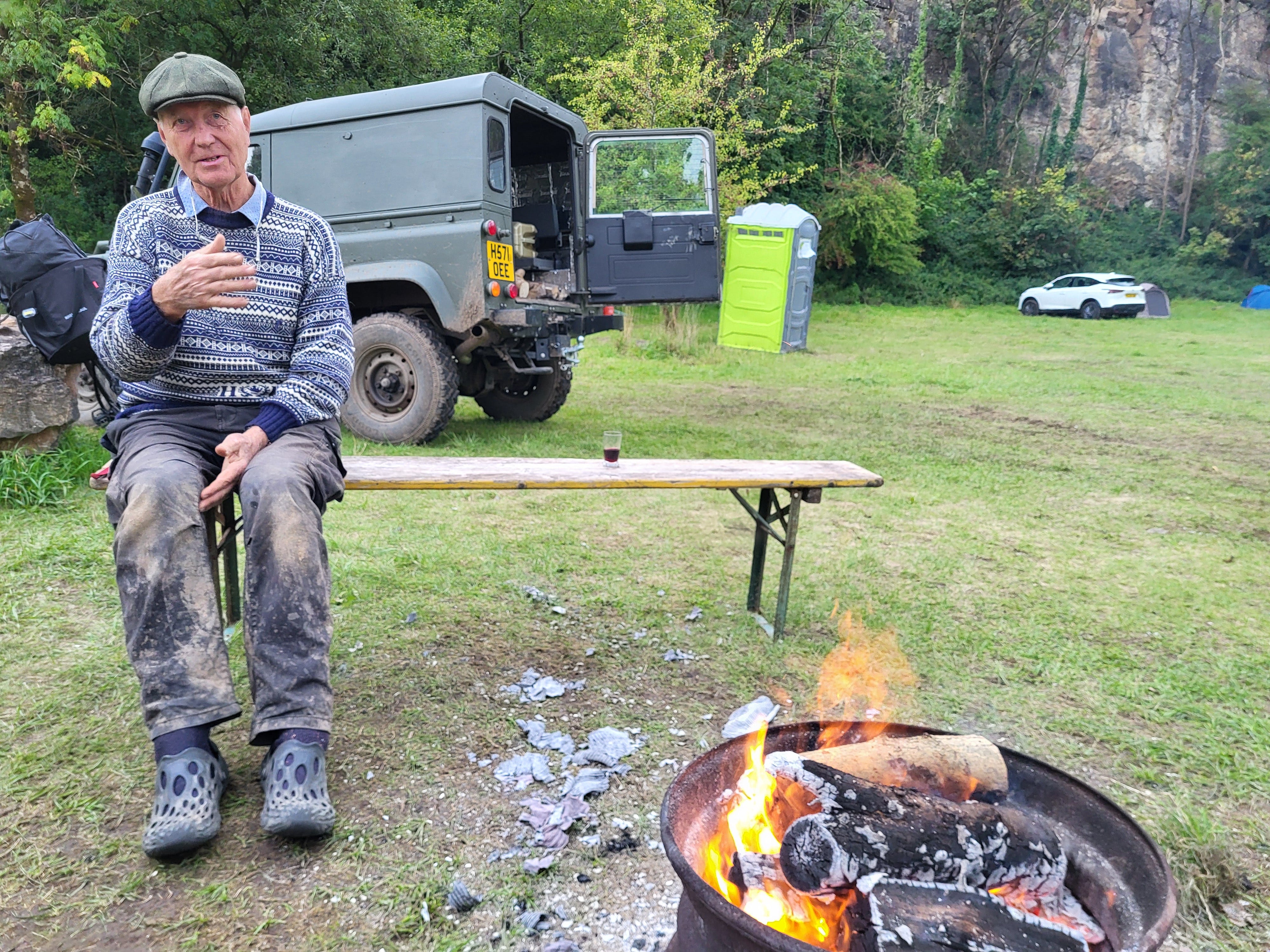
And finally, I spent an afternoon on the Isle of Sheppey meeting the amazing volunteers working to connect the east and west of the island with a traffic-free path. At present Sheppey has busy main roads but few other transport options. This amazing group of residents have big ideas to change that - and a lot of power tools. I joined them as they cleared brambles from their first section of path and talked to them about how they got there.
This path project shows what happens when communities take action on the ground - and the power of bringing in the whole community to support a path.
We start off meeting 80 year old Linda Brinklow, to talk through some of the potential sections of a route she and volunteers started clearing in 2023/24, on the west of the island, nearest the mainland. The route follows a former light railway line, which was dismantled in 1950. The group have created a dirt path on part of the former railway line, near Sheerness Golf Club
After meeting Linda we join volunteers on their annual bramble clearing event, with strimmers and loppers.
The group hopes that, from Minster, the route can proceed into a cemetery and at the edge of a field and potentially a sports ground, towards Queenborough. In the other direction, the group is working with local communities, landowners and local businesses to continue the route all the way to the east of the island, at Leysdown, roughly following the route of the old railway. We start our conversation beside part of that busy road.