
Cardiff's green revolution
Steady, slow progress

British cities are famously accustomed to rainfall and traffic jams, but a winter of three months of almost constant downfall broke records, even for this rainy isle. The pendulum has since swung from one extreme to the other as the UK currently swelters through a record-breaking May heatwave that has challenged urban infrastructure in other ways. For one thing, it’s underlined how acres of hard paving, devoid of plants and shade, are exacerbating extreme daytime heat and keeping night time temperatures dangerously high in built-up areas.
Forward-thinking cities have been busy preparing for climate-change induced wetter winters and hotter, drier summers for some years. Even better, they’re doing it alongside walking and biking infrastructure that help improve urban health.
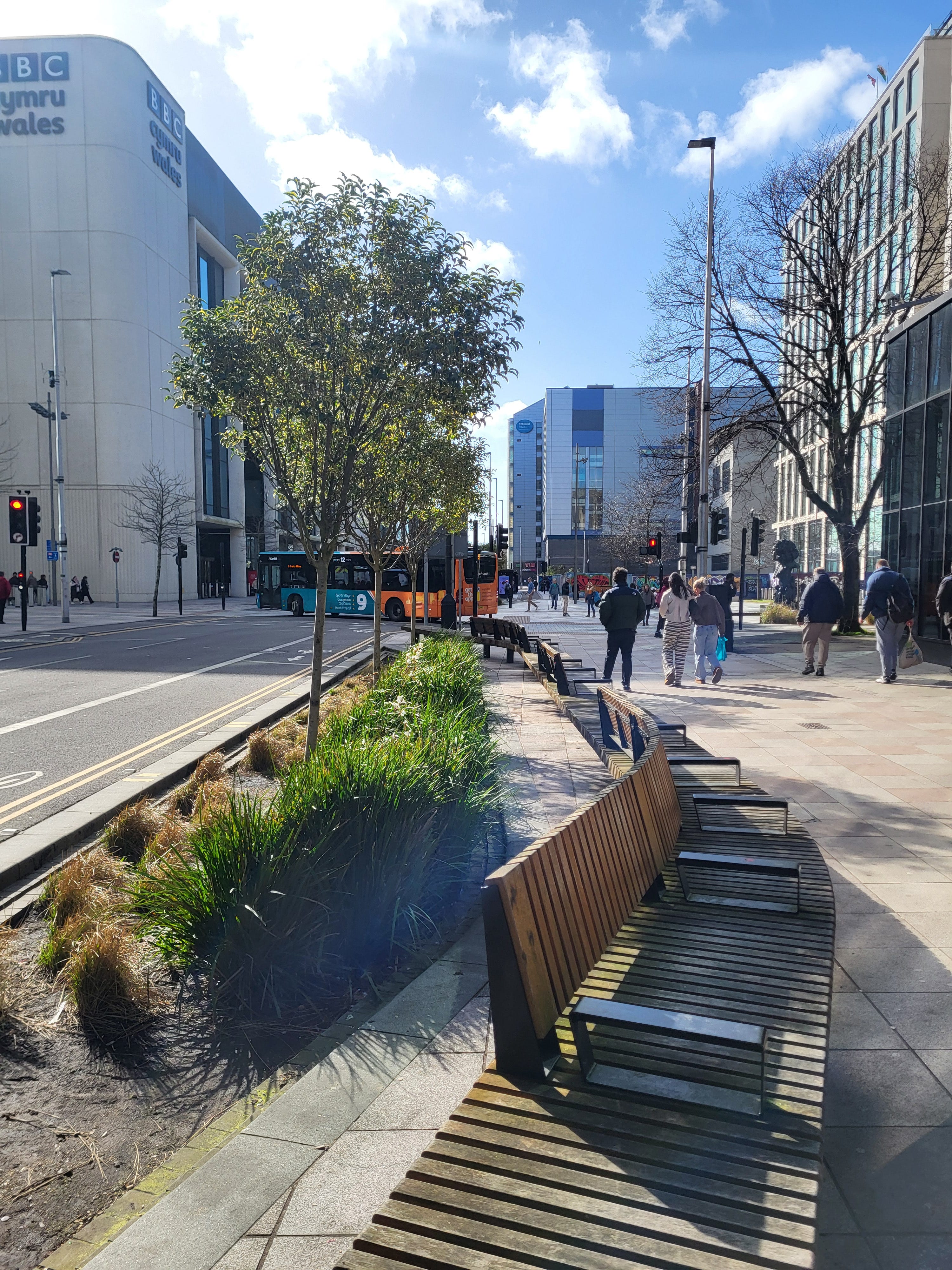
Seemingly simple planted areas around new cycle tracks and pedestrian plazas also act as high-tech flood and heatwave mitigation. These sustainable drainage systems (SuDS) or, colloquially, rain gardens, are pockets of greenery, often at the roadside, that not only soak up rainwater but provide shade during heatwaves. After a decade or so of learning, the UK’s world-leading engineers have developed structures that even filter out harmful pollutants from the roads themselves.
Cardiff is one of Britain’s wettest cities with, on average, 1203mm of rainfall a year. For a soggy Spice Girls reunion concert in 2019, revellers may have crossed Wood Street between the Principality Stadium and Cardiff Central Station, only to be drenched by surface water disturbed by passing drivers. Now, rain gardens line a new bike lane on Wood Street, and bus stops are topped with green roofs. At the nearby BBC Cymru (BBC Wales) offices, on Central Square, a large grassy bowl is surrounded by brand new seating. Thanks to all of these planted areas, even after heavy rain one local friend reports there’s no more flooding on Wood Street.
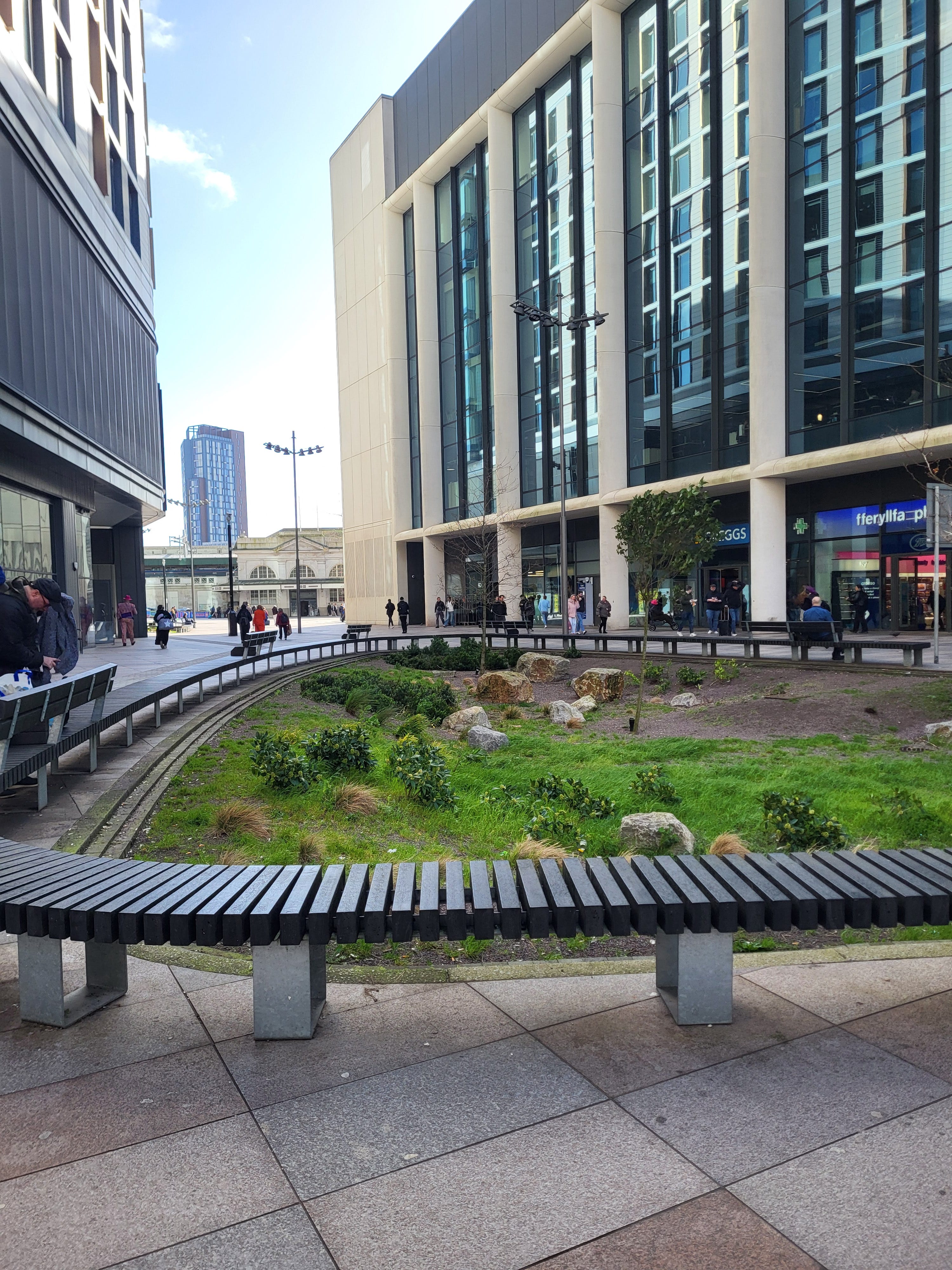
Councillor Dan De’Ath is in charge of Climate Change, Strategic Planning and Transport in Cardiff. While five years ago many people dismissed the city’s preparations as something akin to scaremongering, the terrifying reality of climate change is gradually dawning. Thankfully some of the required trees are already in and growing, providing slightly more shade each year.
Cllr De’Ath told me: “It’s been searingly hot and people are like ‘oh my god this is right, we need to do something about it’ and had we not been on the front foot already, it would have taken a long time and cost a lot more.”
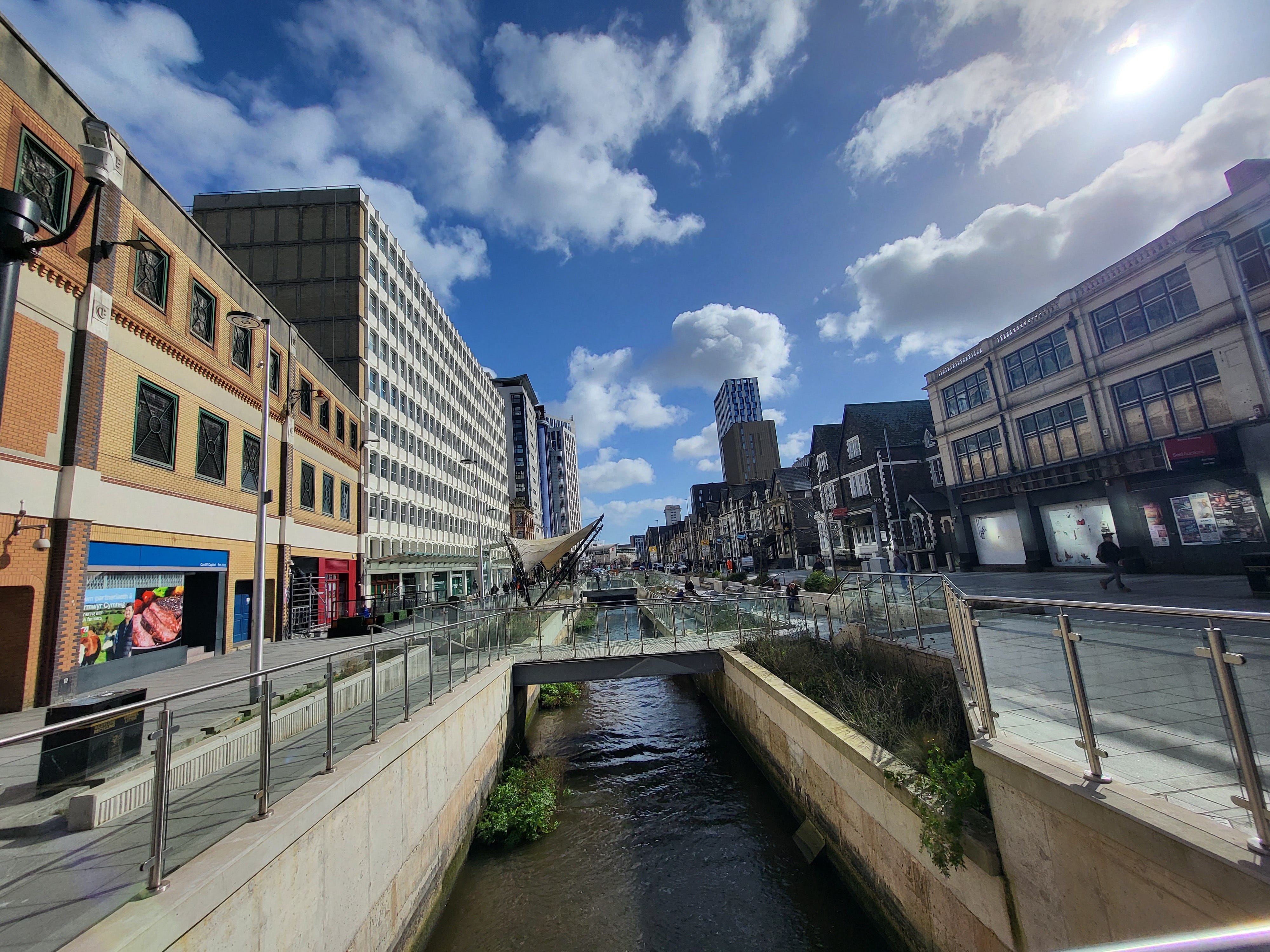
De’Ath and I met beside the Dock Feeder Canal on Churchill Way, a recently ‘daylighted’ stretch of waterway that was formerly underneath acres of tarmac, topped by parking on a dead-end road. Now, surrounding the water are seating and planted areas. My local friend joked when I visited that someone had been along and cleared a lot of accumulated litter in the previous days, for my arrival. Either way De’Ath notes this is part of making Cardiff an attractive place to visit and live - and surrounding buildings are gradually being revitalised as businesses look to move in to the attractive new public realm. It’s right beside the main shopping street, Queen Street in the city centre, so prime real estate.
On national otter day it would be remiss if I failed to mention an otter was filmed in the newly opened stretch of water, much to everyone’s delight.
Hard-working plants
A rather nerdy but brilliant detail is how hard-working these planted areas are, depending on what’s around them, i.e., the type and volume of vehicles being used nearby and how polluted the water runoff is. Beneath the drooping sedge, common reed, cotton lavender and hebes swaying beside the roadways and paving is a substrate mix of soils, stone and slate, and even holding tanks. In Cardiff, rather than being pumped eight miles to a water treatment plant for cleaning, soil bacteria and multi-layered substrates remove pollutants from the nearby roads on-site. They then filter, hold and then trickle clean water back into the River Taff. Periodically the contaminated (Welsh) slate is removed and replaced, saving the plants from poisoning.
While London, Manchester, Leeds and Sheffield are all developing SuDS around their bike lanes, Cardiff is doing so in a more concerted way. That’s because, in 2019, the devolved Welsh government passed world-first legislation requiring that built structures impacting rainwater over an area of 100m2 or more, including cycleways, must include SuDS. One source I spoke to reports more than 8,000 property developments have now been impacted by this legislation, and while homebuilders might not like to admit it, the dwellings built with the new requirements - even on the same site as those built prior - are selling for more money, because unsurprisingly people want to live surrounded by greenery.
Simon Dooley, on Cardiff’s flood mitigation team, told me as well as supplying bees and butterflies with habitats and nectar - required as part of the legislation - rain gardens’ overflow pipes now have a close-knit grille, so reptiles don’t fall in and become trapped.
UK SuDS lead the way
Cardiff’s first SuDS were built in 2017, in a £3m city centre neighbourhood project called Greener Grangetown. Its 108 rain gardens, installed on street corners, and on a ‘cycle priority street’ alongside the river, soak up 40,000m2 of water a year - the same volume as Amsterdam’s Edge building. The project has since reaped an estimated £8.4m in health, air quality and amenity benefits. While parts of the city bakes, good tree cover can reduce local road surface temperatures by up to 20c.
Greening cities helps human health, too: recent research found 83% of Cardiff residents would walk more if there were more parks and green spaces close to home. Cllr De’Ath adds: “There is proper hard evidence to show the positive effects psychologically and on general well-being of seeing trees and greenery. It’s proven to have genuine biological benefits, as well as looking nice.”
There’s also a hard economic argument. In a city with a daily tide of 100,000 commuters, getting people out of their cars is crucial. In 2019 congestion cost the Cardiff economy £109m.
Cities around the world are fighting similar water management battles, from ‘sponge cities’ in Australia and China, to US cities trying to stay afloat as groundwater levels drop. In Cardiff, Simon Dooley speaks to the power of homegrown British innovation. Greener Grangetown used Chinese granite that suffered long shipping delays; since then a British company, GreenBlue Urban, is honing the necessary skillset, using local materials for the beds, and local authorities are increasingly sharing their hard-earned knowledge between them. In England the government stopped short of mandating SuDS measures, opting for national standards instead, so delivery in new developments and infrastructure projects is far patchier.
Steady, but slow
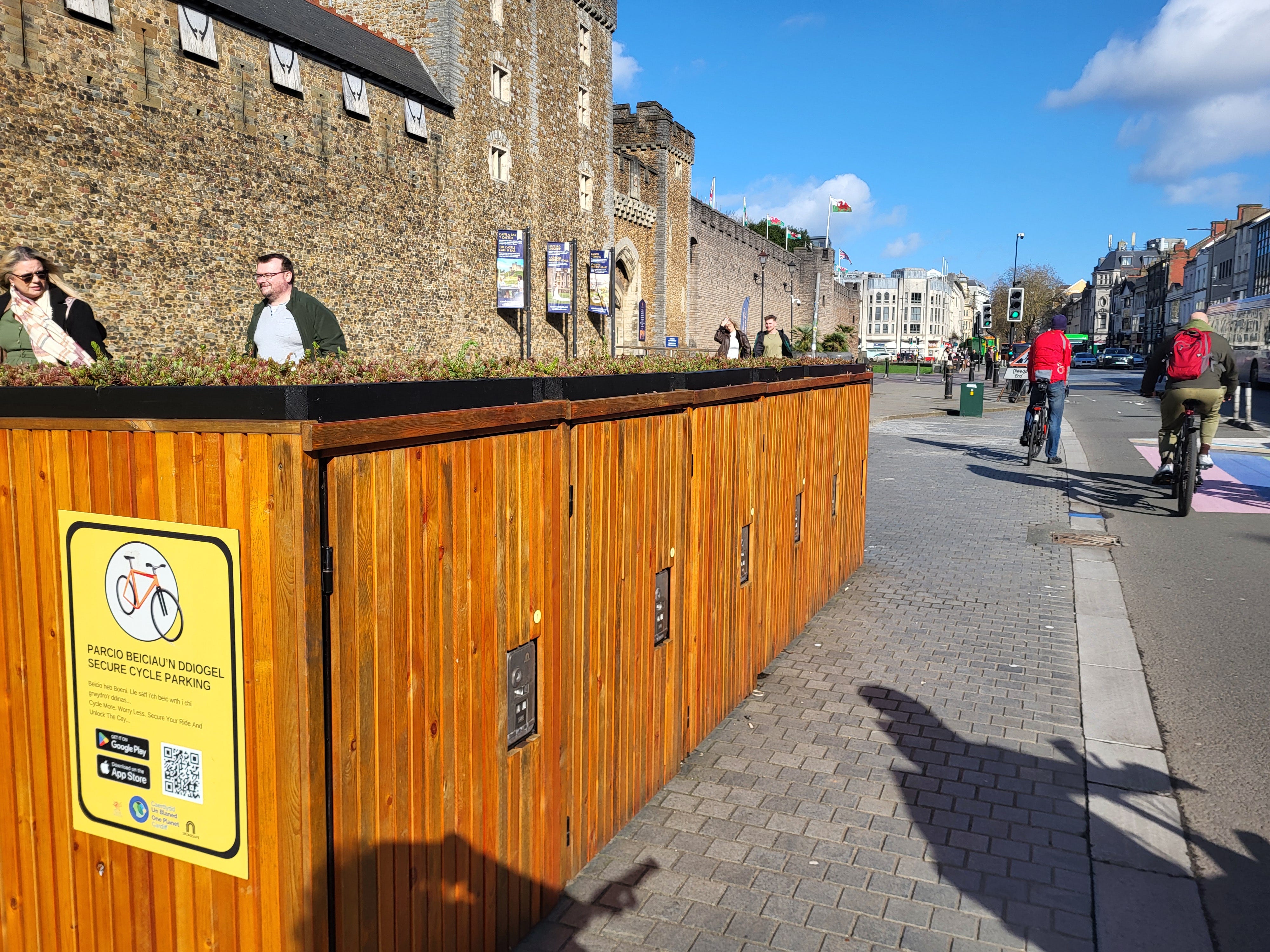
Cardiff’s high-tech rain gardens may be effective, but they come at a cost and can be complicated to deliver. After a pandemic boom in pop-up routes, Cardiff has expanded its main road cycleway by just two miles in two years – choosing instead to improve existing Covid-era ‘pop-up lanes’. Cycle campaigner Hamish Belding wants to see an extension of the city’s emergency cycleways programme first, temporary routes to create a network, which is then fleshed out and ‘gold-plated’ later. It’s a view shared by new Welsh minister, Dafydd Trystan – whom some of you will remember from my book.
As it stands, there are frustrating gaps: just 400m past the end of the Castle Street cycleway, Trystan points out, is a large new school, whose pupils lack a safe cycle route. Meanwhile, city centre pedestrian areas are wall-to-wall hard paving, albeit with some established tree cover - there’s a lot of ground to make up.
There’s also public education needed: one Cardiff shop owner complained about the rain garden outside his shop looking like a mud puddle. It turned out someone was parking in it. Wooden bollards haven’t deterred the offender; the day I visited, fresh muddy tyre marks led from the rain garden onto the road.
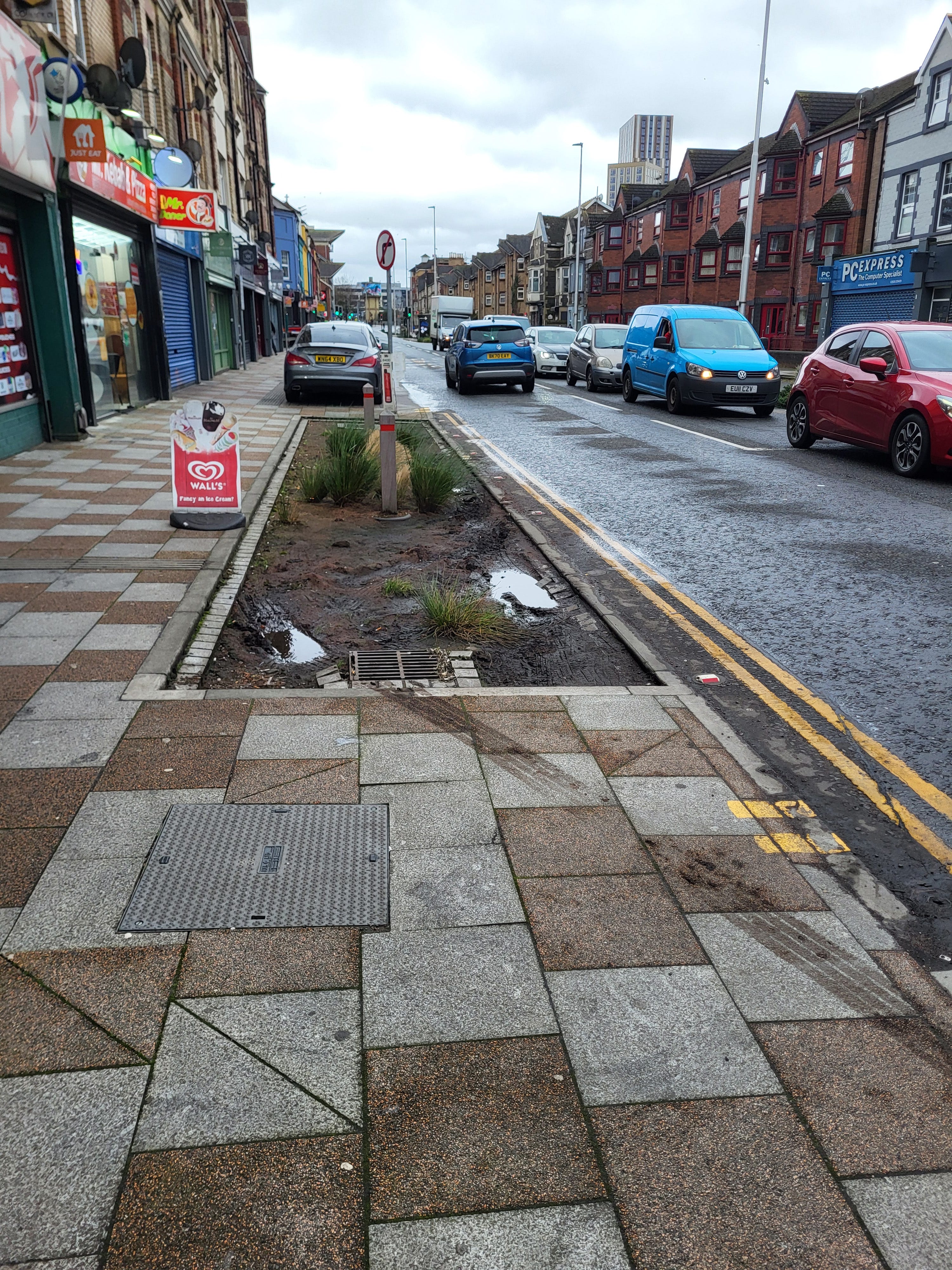
Still, Cllr De’Ath believes firmly in the programme. He says: “If we didn’t do it now, I think in ten, 15 years’ time we’d look back and think ‘oh my goodness why the hell did we let this happen?’ I think the costs we would incur by not putting in the preventative measures now would far outweigh anything we spent on SuDS and flood prevention.”
He adds: “Who wouldn’t like to live in a greener, less flood-prone city?”
Good to see you mention bad as well as good. There is some great stuff in Cardiff but does feel like it’s slowed up recently and there are some frustrating missing links/infrastructure inaccessible to non standard cycles/easy wins not being done. I teach adult learners at Cardiff Pedal Power and nothing shows up the good and bad like riding around with a learner/someone on a trike. Come and visit us next time you’re in Cardiff! There are a lot more cyclists in Cardiff now than 10yrs ago but it’s still very car dependent and far too easy to drive and park to make cycling truly appealing.